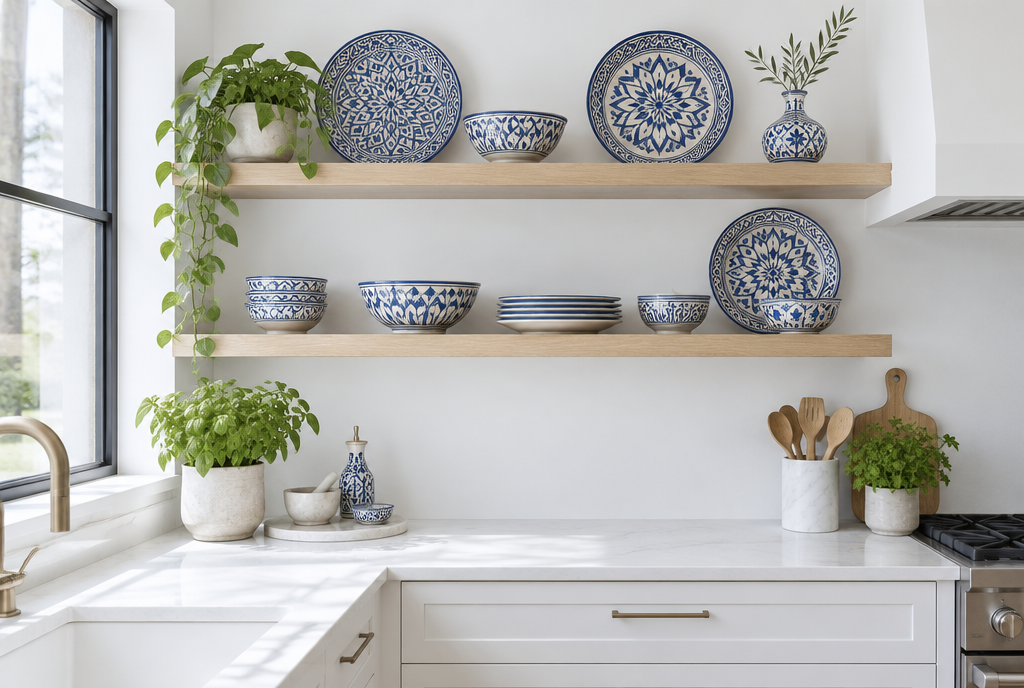
To style open kitchen shelves with Moroccan ceramics, choose a small group of hand-painted pieces from Fez and Safi, keep one dominant glaze color, mix heights and leave generous empty space. Use the plates and bowls you actually reach for every day, and keep decorative glazed pieces for display only.
Key takeaways
- Fez pottery is known for white glaze with cobalt blue painting. Safi pottery uses red clay and greens, turquoise and ochre.
- Limit each shelf to two or three glaze colors and repeat them across shelves.
- Heavily glazed decorative pieces sold as souvenirs are often display only. Check for a food safe label before eating from them.
- Stack bowls, lean plates and leave a third of each shelf empty so the wall can breathe.
In this guide
- Why do Moroccan ceramics suit open shelves?
- What is the difference between Fez and Safi pottery?
- How do you arrange the shelves?
- Which colors and shapes go together?
- Which pieces are safe for food?
- How do you care for handmade ceramics on open shelves?
- Frequently asked questions
Why do Moroccan ceramics suit open shelves?
Open shelves are only as good as what sits on them. Mass produced white dishes look tidy but flat. Handmade ceramics add variation in glaze, shape and brushwork, so even a modest shelf looks considered. Morocco has centuries of pottery tradition, and its two best known centers give you very different palettes to work with.
They also work in ordinary modern kitchens. Against white walls and light wood, blue and white plates or green glazed bowls read as a deliberate accent rather than a theme.
What is the difference between Fez and Safi pottery?
Fez pottery is the older urban tradition. Local grey clay is thrown on the wheel, covered in white glaze, hand painted with cobalt blue and fired twice. Patterns lean toward arabesques and geometric interlace, with Amazigh motifs such as diamonds and zigzags. The result is the classic blue and white associated with the city.
Safi sits on the Atlantic coast and is the country’s largest pottery production center. Its red clay takes a wider palette of green, turquoise, black and ochre, and some pieces are decorated with thin sheets of hammered metal set into the clay. Safi is also where much of the green tile seen on Moroccan rooftops is made.
| Feature | Fez | Safi |
|---|---|---|
| Clay | Fine grey clay that fires pale | Mineral rich red clay |
| Typical palette | White with cobalt blue | Green, turquoise, black, ochre |
| Pattern style | Arabesques and fine geometry | Bold geometry, sometimes metal inlay |
| Best shelf role | Calm anchor pieces: plates, jugs, vases | Color accents: bowls, small dishes |

How do you arrange open kitchen shelves with handmade ceramics?
Start with function. Put everyday plates and bowls on the lowest shelf, within easy reach, and keep decorative jugs and vases higher up. Then work in layers.
- Clear the shelf and wipe it down, then group pieces by color before you place anything.
- Set the largest piece first, such as a platter leaning against the wall or a tall jug at one end.
- Add stacks of bowls in odd numbers. Three or five looks more natural than four.
- Vary height with a cutting board, a small riser or a plant.
- Step back and remove one item. Leave roughly a third of the shelf empty.
Pro tip: Photograph the shelf before you finish. A phone picture shows imbalance, clutter and color clashes far faster than your eye does in the room.
Which colors and shapes go together?
Choose one dominant glaze and one supporting color. A shelf of Fez blue and white with a single green Safi bowl looks intentional. A shelf with five competing glazes looks like a shop display. Repeat the same colors on a second shelf or on a nearby tile backsplash so the eye connects them. Our guide to zellige backsplash ideas shows how handmade tile and ceramics can share a palette.
Mix shapes as well as colors. Pair flat plates with deep bowls, and round forms with one tall narrow jug. Pieces with busy patterns need quiet neighbors, such as a plain white dish or a wooden board.

Which Moroccan ceramics are safe for food?
This matters more than any styling rule. Brightly glazed decorative pieces sold in tourist markets can use lead or cadmium based glazes and are intended for display only. Unglazed cooking tagines and ware labeled as food safe are a different category. Decorated tagines with painted lids are generally for serving or display, not for cooking.
If you plan to eat from a piece, look for a clear food safe or lead free statement from the maker or seller, and ask when it is not stated. Keep anything uncertain on the top shelf as decoration.
How do you care for handmade ceramics on open shelves?
- Kitchen grease and dust settle on open shelves, so wipe pieces with a damp cloth every week or two.
- Keep display pieces away from the stove, where airborne grease builds up fastest.
- Use felt dots or a thin shelf liner under heavy pieces to prevent scratches and slipping.
- Wash daily-use pieces by hand unless the maker says the dishwasher is fine.
- Secure the shelf brackets properly: a stack of ceramic is heavy.
Frequently asked questions
How do you style open kitchen shelves with ceramics?
Group pieces by color, place the largest item first, stack bowls in odd numbers, vary height and leave about a third of the shelf empty.
What is the difference between Fez and Safi pottery?
Fez pottery is typically white glazed with cobalt blue painting on grey clay. Safi pottery uses red clay with green, turquoise, black and ochre glazes.
Are decorative Moroccan ceramics food safe?
Not always. Heavily glazed decorative pieces may be display only. Look for a food safe or lead free label before eating or drinking from a piece.
How many colors should open shelves have?
Two or three glaze colors per shelf is enough. Repeat them across shelves so the display feels cohesive.
Can you cook in a decorated tagine?
Painted, highly glazed tagines are usually for serving or display. Cooking tagines are typically unglazed or lightly glazed terracotta.
Leave a Reply