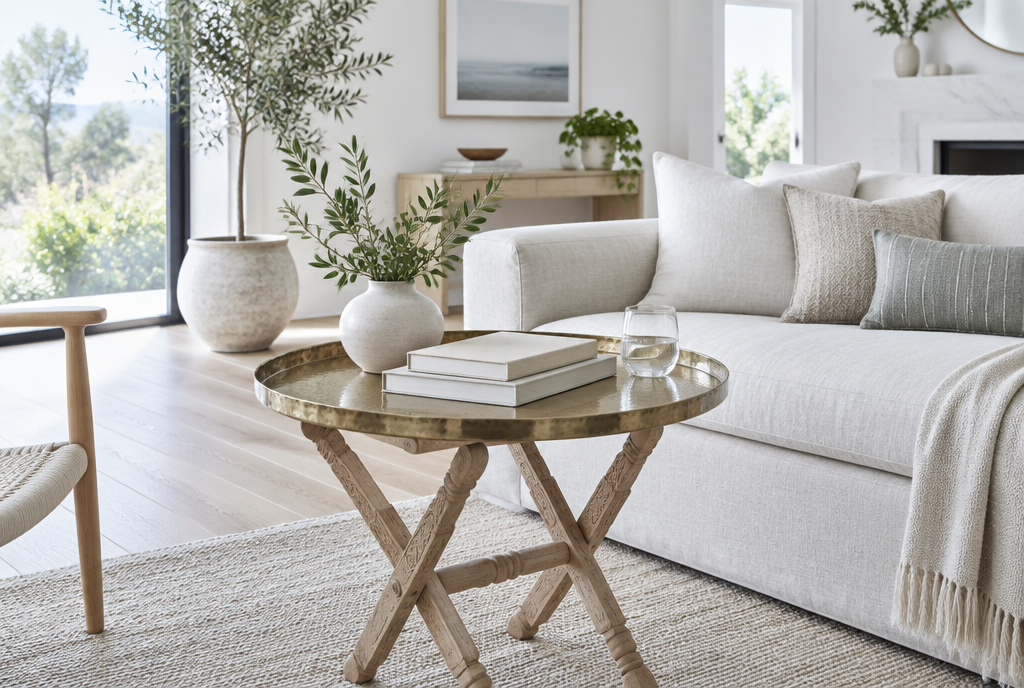
A Moroccan brass tray table is a round, hand engraved or hammered metal tray set on a folding wooden stand, and it works as a coffee table, side table or bar surface in almost any modern room. Choose a tray between 24 and 32 inches wide, keep the styling to three or four objects, and treat the metal as a material that will age. Brass mirrors and small copper trays then repeat the same tone elsewhere without crowding the room.
Key takeaways
- A tray table sits lower and wider than many coffee tables, so measure the space between sofa and table before you buy.
- Unlacquered brass darkens and softens over time. Lacquered brass stays closer to its original color.
- Use one large brass piece per room, then add smaller copper or brass accents in the same finish.
- A round brass mirror reflects light and softens a room full of straight lines.
In this guide
- What is a Moroccan brass tray table?
- How do you style a Moroccan brass tray table?
- What size and height should you choose?
- Brass, copper or nickel silver: which metal suits you?
- How do you clean a brass tray?
- How do brass mirrors and copper trays fit in?
- Frequently asked questions
What is a Moroccan brass tray table?
The tray table comes from the tea tradition. A wide metal tray holds a teapot and glasses, and a low folding stand of carved or turned wood lifts it to table height. The tray is usually decorated by hand, either hammered with a small mallet or engraved with geometric and floral patterns.
Metalwork has a long home in Fez, where the coppersmiths’ square, Place Seffarine, is still known for workshops that beat and engrave brass and copper. Each piece differs slightly, which is part of the appeal and the reason two trays of the same size can look quite different.
How do you style a Moroccan brass tray table?
The tray is already decorative, so the goal is restraint. Start with something tall, add something low, and finish with something living. A small vase or candle holder, a stack of two books and a bowl of fruit or a plant is enough. Leave a clear patch of metal so the engraving still shows.
Because the surface has a slight dish or rim, keep wide, flat items such as laptops and loose magazines off it, and use coasters under glasses to avoid ring marks and noise. The same tray, set with a teapot and glasses, also works as a serving surface for guests, which is what it was designed for.

Pair it with natural, matte materials. Linen, wool and light wood let the brass be the one shiny element. For more ways to combine metal with rugs and poufs, see our living room ideas with handmade rugs, leather poufs and brass trays.
What size and height should you choose?
A common design guideline is to leave roughly 14 to 18 inches between the sofa edge and the table, and to keep the tabletop close to the height of the sofa seat. Many tray stands sit a little higher than a standard coffee table, so check the stand height as well as the tray diameter.
- Large sofa or sectional: a tray of about 30 to 36 inches keeps the scale balanced.
- Apartment sofa or two chairs: 24 to 28 inches is usually enough.
- Bedside or reading corner: a small tray of 16 to 20 inches on a compact stand.
- Check that the stand folds flat if you plan to move or store it.
Brass, copper or nickel silver: which metal suits you?
Most tray tables are brass, an alloy of copper and zinc. Copper trays are also common, and silver toned versions are usually nickel silver, an alloy that contains no silver. The right choice depends on the tone you want and how much upkeep you accept.
| Metal | Look | How it ages | Upkeep | Best for |
|---|---|---|---|---|
| Brass | Soft golden, reads as neutral | Darkens to a mellow tone if unlacquered | Occasional polish or none | Most rooms, mixed with wood and linen |
| Copper | Pinkish, slightly redder | Warm brown patina, can turn green in damp | Polish to keep bright | Kitchens, dining areas, bar carts |
| Nickel silver | Cool, silver toned | Dulls gently | Light polishing | Rooms with chrome or black fixtures |
Solid brass is not magnetic, so a magnet that clings firmly suggests a steel core under a thin brass look finish. Ask a seller about the metal and whether the tray is lacquered before you buy.
Pro tip: Place a thin felt or cork pad under any ceramic or glass piece that will stay on the tray. It stops scratches on the engraving and quiets the clink when you set something down.
How do you clean a brass tray?
Start gently. Dust with a soft cloth, then wipe with warm water and a drop of mild dish soap, and dry right away. For unlacquered brass that has dulled, a paste of lemon juice and salt or baking soda, rubbed on lightly and rinsed well, brings back brightness. Test a hidden spot first.
Lacquered brass should not be scrubbed or polished with acid, since that can lift the coating. If the finish is peeling, it is better to have it stripped and refinished than to patch it. Many people simply let unlacquered pieces darken, because the aged tone suits natural materials well.

How do brass mirrors and copper trays fit in?
Once you have one large brass piece, repeat the finish at a smaller scale. A round brass mirror above a console or a sideboard bounces light across the room, and a thin metal frame feels lighter than a heavy wooden one. Hang it with its center near eye level, around 57 to 60 inches from the floor, and keep it a hand’s width above the furniture below.

Small hammered copper or brass trays are useful by the front door for keys, on a dresser for jewelry, or in the bathroom for soap and a brush. They also suit open shelves, where they can group small objects on a clean base. Our guide to styling open kitchen shelves with Fez and Safi ceramics shows how a metal tray can anchor a shelf display.
Keep a limit of two metal tones per room. Brass and copper sit well together because they share a warm base, while a third finish starts to look busy.
Frequently asked questions
What is a Moroccan brass tray table?
It is a round, hand engraved or hammered metal tray set on a folding wooden stand. It began as a tea serving table and is now used as a coffee table or side table.
How do you style a brass tray coffee table?
Keep it to three or four objects: something tall, something low and something living, such as a vase, two books and a plant. Leave some bare metal showing so the engraving stays visible.
How do you clean a hammered brass tray?
Wipe with warm water and mild soap and dry right away. For dull unlacquered brass, use lemon juice and salt or baking soda lightly, then rinse. Do not use acid on lacquered brass.
Is a round brass mirror still in style?
Round mirrors with thin metal frames are a common choice because they soften straight lines and reflect light. Brass is a neutral warm tone that pairs with wood, linen and plants.
Does brass tarnish?
Unlacquered brass darkens over time and develops a patina. Lacquered brass resists this until the coating wears. Either can be kept bright with gentle cleaning if you prefer.
Can I mix brass and copper in the same room?
Yes. They share a warm base, so they pair well. Try to limit a room to two metal tones to keep it calm.
Leave a Reply