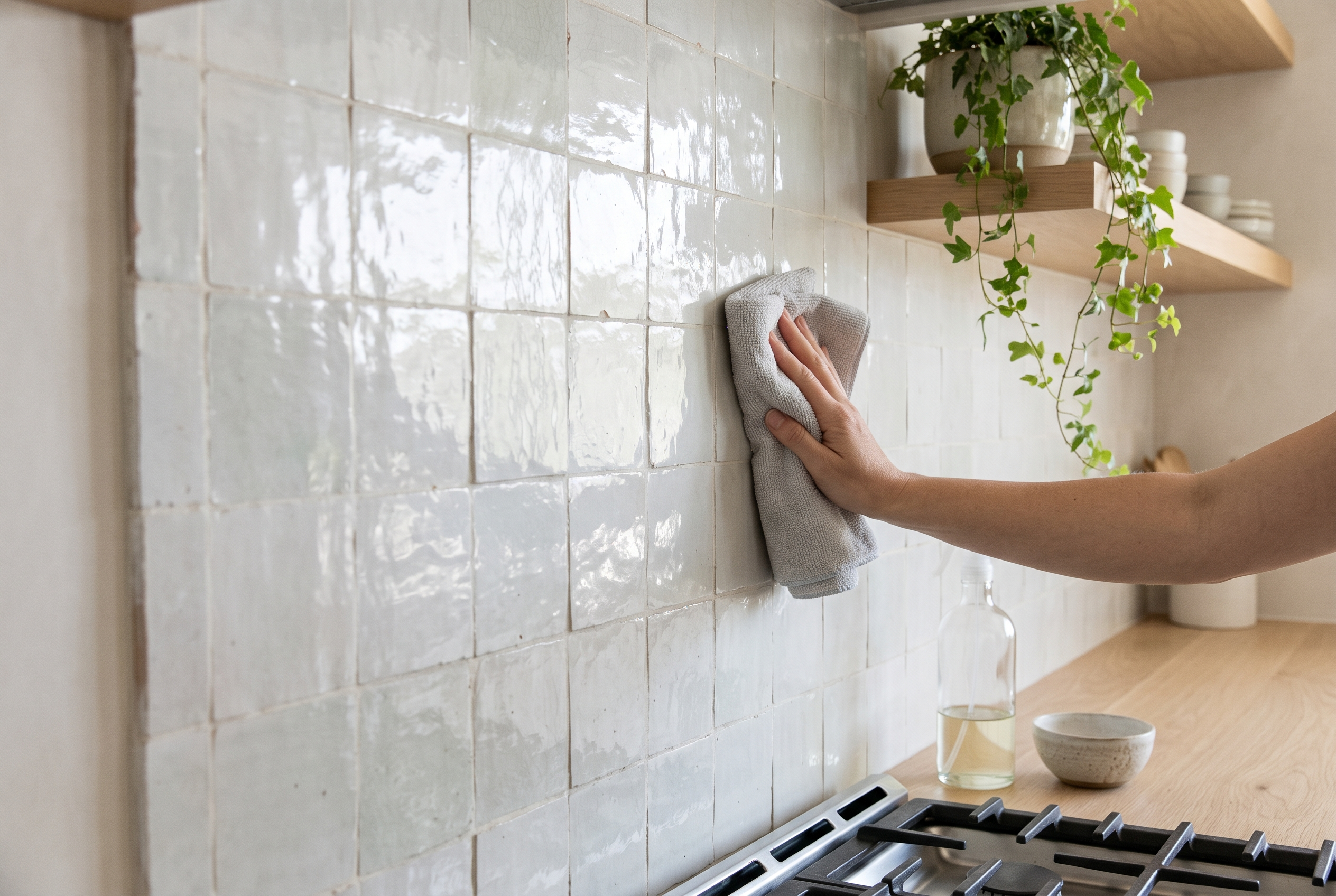
To clean zellige tile, wipe it with a soft cloth and warm water, use a small amount of pH neutral cleaner when it needs more, then rinse and dry. Skip acids, bleach and abrasive pads. Glazed zellige rarely needs sealing, but its cement grout does, and unglazed zellige must be sealed before it goes anywhere near water.
Key takeaways
- Everyday cleaning is warm water, a soft cloth and a few drops of pH neutral cleaner. Rinse and dry.
- Glazed zellige usually does not need sealing. The grout lines do.
- Unglazed zellige is porous and must be sealed, then resealed roughly every one to two years, sooner in wet areas.
- Avoid bleach, acidic cleaners, abrasive scrubbers and soaking the tile.
In this guide
- How to clean zellige tile without damaging the glaze
- Glazed or unglazed: what changes?
- How do you remove stains and hard water marks?
- What should you never use on zellige?
- Does zellige tile need sealing?
- How do you seal zellige tile step by step?
- How do you care for zellige grout?
- Frequently asked questions
How to clean zellige tile without damaging the glaze
Zellige is fired clay, cut and glazed by hand, so the surface is uneven on purpose. That texture is part of the appeal, and it also holds dust and splashes in tiny dips. Good zellige tile care is gentle and regular rather than aggressive.
- Wipe with a damp microfiber cloth and warm water. Do this often on a kitchen backsplash, where grease and splashes build up.
- For stuck-on residue, add a few drops of a pH neutral cleaner to the water. Rinse with clean water so no film is left on the glaze.
- Dry with a soft cloth to avoid water spots, especially in showers and around sinks.
- On floors, sweep or vacuum first, then use a damp mop that is wrung out well. Do not flood the surface.
- Use a soft brush for dips and edges. The fine crackle lines in the glaze are normal and are not dirt.
The same routine works when you want to clean a zellige backsplash behind a stove. Wipe after cooking, and give it a fuller wash every week or two. If you are still choosing a layout, our zellige backsplash ideas cover colors and installation details.
Glazed or unglazed: what changes?
Most zellige sold today is glazed, with a glassy, slightly wavy surface. Unglazed or natural zellige has a matte, textured face with no glass coating, so it behaves more like stone. Tile makers give slightly different advice, so follow the instructions that came with your order. These are the general differences.
| Question | Glazed zellige | Unglazed zellige |
|---|---|---|
| Surface | Glossy, glass-like glaze | Matte, porous clay face |
| Sealing the tile | Usually not needed | Required, before and after grouting |
| Sealing the grout | Recommended | Recommended |
| Stain risk | Low on the glaze, higher in grout | High if unsealed |
| Hard water marks | Gentle diluted vinegar, rinsed well | No vinegar, use pH neutral cleaner |
| Reseal | Grout as needed | About every 12 to 24 months, sooner in wet areas |

How do you remove stains and hard water marks?
Act quickly. Blot spills instead of rubbing, then wash with warm water and a pH neutral cleaner.
- Grease: use warm water with a mild pH neutral degreasing cleaner, then rinse.
- Hard water on glazed tile: a diluted white vinegar solution can lift limescale. Test it on a spare tile, keep contact short, keep it off the grout, and rinse thoroughly. Never use it on unglazed tile.
- White powder (efflorescence): these are salts that move to the surface. Let the area dry fully, brush the powder off with a soft brush, then wipe with a pH neutral cleaner.
- Soap scum in showers: squeegee after use and ventilate the room. Regular wiping beats scrubbing later.
Deep stains on unglazed tile are hard to reverse, which is the main reason sealing matters. Ask a tile professional before trying strong products.
What should you never use on zellige?
- Bleach and harsh degreasers, which can dull glaze and discolor grout.
- Acidic cleaners, including limescale removers and vinegar on grout. Acids can degrade cement grout and let moisture reach the wall behind.
- Abrasive pads, powders and stiff wire brushes, which scratch glaze.
- Soaking or flooding unglazed tile, which pushes water into the clay.
- Steam cleaners on grout or unsealed tile. Heat and moisture can weaken grout and sealers.
- Cleaners that leave a residue, including oil soaps and wax-based polishes, which can cloud the glaze.
Does zellige tile need sealing?
It depends on the finish. Glazed zellige generally does not need sealing, because the glaze already blocks water. Unglazed zellige does, and crackle-glazed pieces benefit from it too, since fine lines can hold stains. Installers typically use cement grout with zellige, and cement grout is porous, so sealing the grout is sensible on every installation.
Epoxy grout is more stain resistant and is sometimes used in wet areas, but it looks different and is harder to work with, so talk to your installer. Our zellige tile guide explains how the tile is made and why finishes vary.
Pro tip
Test any cleaner or sealer on a spare tile or a hidden corner first. Every batch of handmade tile absorbs a little differently, so keep a few extra tiles from your order for exactly this.
How do you seal zellige tile step by step?
- Wait until the tile is installed and the grout has fully cured. Check the grout maker for timing, which is often a week or more.
- Clean the surface with a pH neutral cleaner and let it dry completely.
- Choose a penetrating sealer made for porous tile or natural stone, not a thick topical coating, and test it on a spare tile.
- Apply a thin, even coat with a foam applicator or cloth, working in small sections. Use a grout applicator for glazed tile where only the joints need sealing.
- Wipe off excess within the time on the label so no film dries on the surface.
- Let it cure, usually 24 to 48 hours, before the area gets wet. Reseal on the schedule the sealer maker gives.

How do you care for zellige grout?
Zellige joints are thin and slightly irregular, so most dirt and moisture settle there. Seal cement grout after it cures, wash it with a pH neutral cleaner and a soft brush, and avoid acids. In a shower, squeegee the walls and keep the room ventilated. For more on pairing tile with plaster and metal in wet rooms, see our Moroccan bathroom ideas.
Frequently asked questions
Can you use vinegar on zellige tile?
Only a diluted solution, briefly, on glazed tile, and rinse it well. Do not use vinegar on unglazed tile or on cement grout. A pH neutral cleaner is the safer default.
Is zellige tile hard to clean?
Glazed zellige is easy to wipe clean. The uneven surface and grout lines hold a little more dust than flat tile, so a soft brush helps. Unglazed zellige needs sealing first.
How often should you seal zellige tile?
Unglazed zellige is commonly resealed about every 12 to 24 months, sooner in showers and kitchens. Glazed zellige usually needs only its grout sealed. Follow the tile and sealer makers instructions.
Can you steam clean zellige?
It is best avoided. Heat and moisture can weaken grout and sealers, and unsealed tile can absorb the water.
Why does my zellige look cloudy?
Usually a film from soap, cleaner residue or hard water. Rinse well with clean water and dry the tile. A white powder that returns can be efflorescence, which should be brushed off dry.
Is the crackle in the glaze a sign of damage?
No. Fine crackle lines are a normal part of handmade glaze. Keep the surface clean and dry, and seal crackle-glazed or unglazed tile so stains do not settle in the lines.
Leave a Reply